

How to Meal Prep for Busy Weeknights: A 7-Step Plan
Last Updated: October 23, 2026
Quick Summary
How to meal prep for busy weeknights is to prepare proteins and vegetables on Sunday using make-ahead components, then mix and match them into different meals throughout the week. A 30-minute power prep yields 3-4 dinners' worth of components, while a 60-minute session creates 4-5 dinners plus lunch options with minimal repetition.
- Chicken breast, ground turkey, and canned fish stay fresh 3-4 days when properly stored.
- Roast vegetables like broccoli and Brussels sprouts at 400°F for 20 minutes for optimal storage.
- Cool hot food within two hours by spreading it into shallow containers before refrigerating.
- Cooked rice, pasta, and grains keep up to 5 days in the refrigerator when stored airtight.
- The task order that saves time is: heat sources first, then chopping, proteins, sauces, then packaging.
Table of Contents
- Why Meal Prep Matters for Busy Weeknights
- Easy Meal Prep for Beginners: Start Simple
- Build Your Meal Prep Grocery List
- 30-Minute Meal Prep Dinners: Your Weekly Strategy
- Meal Prep Food Safety and Storage Guidelines
- Use Gourmet Skillet Kits to Cut Prep Time
- Common Mistakes to Avoid
- Frequently Asked Questions
Why Meal Prep Matters for Busy Weeknights
How to meal prep for busy weeknights is one of the most practical skills you can develop if you're juggling work, family, and a hundred other commitments.
When you meal prep for busy weeknights, you're building a system: proteins that work across multiple meals, vegetables that stay fresh, and mix-and-match components so Monday's dinner doesn't feel identical to Thursday's.
Easy Meal Prep for Beginners: Start Simple
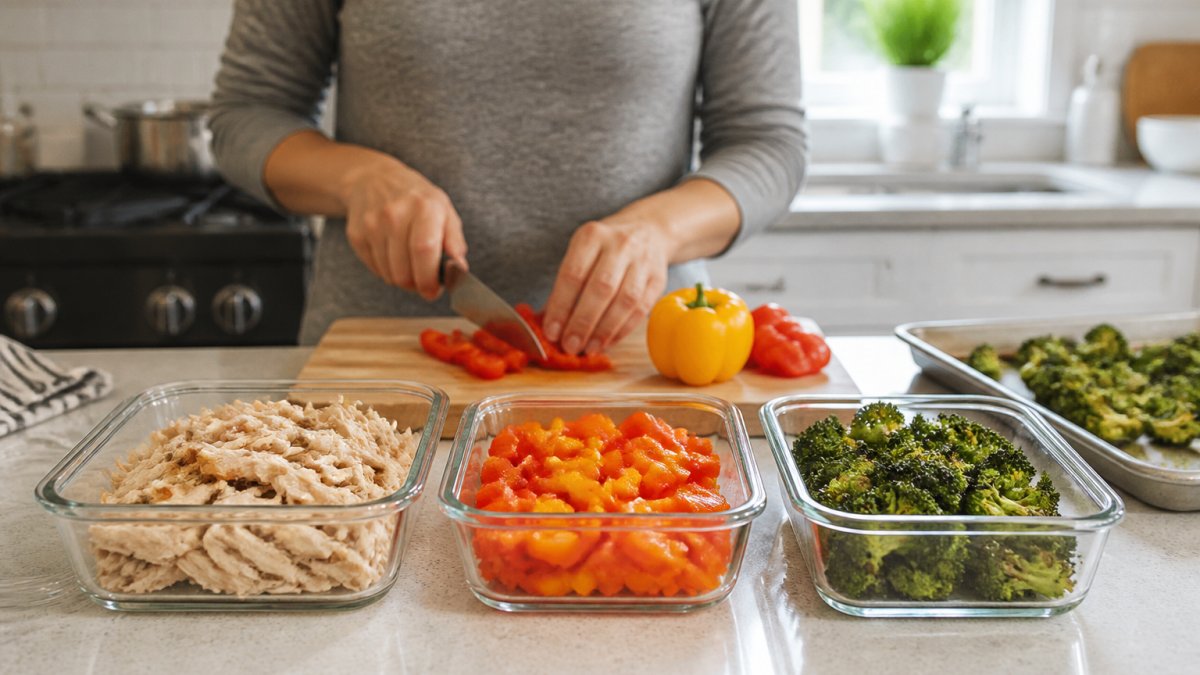
The biggest mistake beginners make is overcomplicating things. You don't need fancy equipment or hours in the kitchen. Start with one goal: prepare proteins and vegetables on Sunday so you can assemble meals quickly during the week.
Choose Your Prep Method
Pick one method and stick with it for your first month. The three simplest are batch cooking, assemble-ahead meals, and make-ahead components.
Batch cooking means preparing large portions of one dish, chili, soup, shredded chicken, and dividing it into containers to reheat all week. Assemble-ahead meals mean prepping parts (protein, grain, vegetables) separately, then combining them fresh each day. Make-ahead components is the most flexible: prep proteins, grains, and roasted vegetables individually, then mix and match them into different meals.
For busy weeknights, we recommend starting with make-ahead components. It takes about the same time as batch cooking but gives you more variety without extra effort.
Pick Flexible Proteins and Vegetables
Chicken breast, ground turkey, and canned fish stay fresh 3-4 days. Beef and pork work too, but use them within 2-3 days or freeze portions.
Cook proteins simply: bake, grill, or simmer. Skip heavy sauces now, add flavor later with seasonings, dips, or quick pan sauces.
For vegetables, choose ones that hold up in storage:
- Broccoli, cauliflower, and Brussels sprouts (roast at 400°F for 20 minutes)
- Carrots, bell peppers, and zucchini (chop and store raw or roasted)
- Green beans and asparagus (blanch briefly, then chill)
Avoid delicate greens and mushrooms for long-term prep. They wilt quickly.
Build Your Meal Prep Grocery List
A focused grocery list is the backbone of meal prep: buy proteins, vegetables, and grains that work together across multiple meals.
Proteins That Work Across Multiple Meals
Buy versatile proteins. Chicken breast works in tacos, grain bowls, pasta, and salads. Ground turkey becomes taco meat, pasta sauce, or patties. Eggs cover any meal, and canned tuna and salmon are shelf-stable backups. For a week of meal prep for busy weeknights, plan 1.5 to 2 pounds of protein per person.
Versatile Vegetables and Grains
Choose 4-5 vegetables across colors and textures to prevent meal fatigue: one leafy green, one cruciferous, one root vegetable, and one quick-cooking option.
Grains anchor your meals. Rice, quinoa, pasta, and oats are all meal-prep friendly, cook in bulk on prep day and store airtight up to 5 days.
| Component | Best For | Storage Time | Prep Method |
|---|---|---|---|
| Chicken breast | Tacos, bowls, pasta | 3-4 days | Bake or grill |
| Ground turkey | Meat sauce, tacos | 2-3 days | Brown in skillet |
| Eggs | Breakfast, salads | 5-7 days | Hard boil or scramble |
| Brown rice | Bowls, sides | 5 days | Cook in bulk |
| Roasted broccoli | Sides, bowls | 4-5 days | Roast at 400°F |
| Bell peppers | Raw or cooked | 5-7 days | Chop and store |
30-Minute Meal Prep Dinners: Your Weekly Strategy
Most meal-prep advice assumes a free Sunday afternoon. The realistic approach is to match your prep session to the time you actually have, 30, 60, or 90 minutes, and run tasks in parallel so the oven, stovetop, and counter all work at once. Below are three time-boxed plans, a task-order cheat sheet, and a fallback for when everything goes sideways.
The 30-Minute Power Prep
For weeks when you have almost no time but still want a head start.
Minute 0-5: Preheat the oven to 425°F.
Minute 5-12: Pat 2 pounds of chicken thighs dry, season with salt and pepper, and place on one sheet pan. Toss 2 pounds of chopped broccoli and bell peppers with olive oil and salt on the second pan. Both pans go in the oven.
Minute 12-20: Brown 1 pound of ground turkey in the skillet with salt, pepper, and cumin.
Minute 20-30: Pull vegetables at 20 minutes and chicken at 25-30 minutes (until 165°F). Drain grains.
The 60-Minute Balanced Prep
Minute 0-10: Preheat oven to 400°F. Start rice. Wash and chop all vegetables at once, the single biggest time saver.
Minute 10-25: Spread vegetables across two sheet pans, grouped by density (roots on one, quick-cookers like zucchini and peppers on the other). Season and roast. Meanwhile, season chicken breasts and ground turkey separately.
Minute 25-40: Sear chicken (4-5 minutes per side, then rest). Brown ground turkey in the same pan after wiping it out. If you have a second burner, simmer lentils or beans.
Minute 40-50: Make one or two quick sauces, lemon-tahini, yogurt-herb, or a simple vinaigrette. These keep prepped food from tasting repetitive.
Minute 50-60: Portion into containers, sauces in small jars. Label with the prep date, cool, then refrigerate.
What you get: 4-5 dinners plus lunch components. The two proteins and two sauces create enough combinations that no two nights feel the same.
The 90-Minute Full Week Prep
Use this when you want the entire week handled, including breakfasts and a freezer backup.
Weeknight Lasagna Skillet - Sensational Skillet →
Minute 0-10: Oven to 400°F. Grains on. Eggs boiling. Vegetables washed.
Minute 10-30: Chop and roast vegetables on two pans. Season and start proteins.
Minute 30-50: Cook chicken, ground meat, and a plant protein (chickpeas or tofu) in sequence.
Minute 70-85: Portion everything.
Task-Order Cheat Sheet
The order that saves the most time is always the same: heat sources first, then hands-on chopping, then proteins, then sauces, then packaging. Start the oven and boiling water before you touch a knife, chop all vegetables in one pass, cook proteins while vegetables roast, make sauces last, and package everything at the end.
When the Week Goes Sideways
Plans change, a late meeting, a sick kid, a takeout craving. Build in one 'flex night' for leftovers, a freezer meal, or eggs and toast. If you prep for five nights and cook four, you're ahead. The point of a time-boxed plan is having a base layer ready so the default isn't delivery.
Meal Prep Food Safety and Storage Guidelines
Food safety separates a system that works from one that makes you sick. The rules are simple: keep cold food cold, cool hot food fast, reheat thoroughly, and label everything. Here's the practical version most recipe roundups skip.
Cooling Before You Refrigerate
The biggest mistake home cooks make is putting a large, hot container straight into the fridge. A big pot of chili or rice can take hours to cool, and the center sits in the temperature range where bacteria multiply fastest.
- Spread it out. Divide hot food into shallow containers rather than one deep pot. More surface area means faster cooling.
- Use an ice bath for big batches. Set the pot in a sink of ice water and stir occasionally until it stops steaming.
- Aim for two hours. Cooked food should go from hot to refrigerated within about two hours (the CDC). If you cannot cool it that fast, portion it smaller.
Refrigerator and Freezer Timelines
Use these as working limits, not targets. The clock starts the day you cook, not the day you buy.
| Food | Refrigerator (40°F or below) | Freezer (0°F) |
|---|---|---|
| Cooked chicken, turkey, beef, pork | 3-4 days | 2-3 months |
| Ground meat dishes (chili, taco meat) | 3-4 days | 2-3 months |
| Cooked rice, pasta, grains | 4-5 days | 1-2 months |
| Cooked vegetables | 3-5 days | 2-3 months |
| Soups and stews | 3-4 days | 2-3 months |
| Hard-boiled eggs (in shell) | 1 week | Not recommended |
Raw vegetables behave differently: hardy items like carrots, bell peppers, and broccoli last 5-7 days in the fridge, while leafy greens and cut tomatoes are best within 2-3 days. Keep dressings and sauces separate until serving, they shorten the life of everything they touch.
Freezer Packaging That Prevents Freezer Burn
Freezer burn is not a safety issue, but it ruins texture and flavor. The cause is air exposure, so the fix is to remove air.
- Use freezer-safe containers or bags. Rigid containers work for soups and stews; bags work for flat portions of rice, sauce, or shredded meat.
- Press out air from bags before sealing, or use a vacuum sealer if you have one.
- Freeze flat. Lay bags of sauce, soup, or grains flat on a sheet pan until solid, then stack them. They thaw faster and take less space.
Safe Thawing and Reheating
Thawing on the counter is the most common unsafe habit. The safe options are:
- In the refrigerator overnight, the best method, but plan ahead.
- In cold water, keep the food in a sealed bag and change the water every 30 minutes.
- In the microwave, use the defrost setting and cook immediately after.
Reheat leftovers to 165°F throughout; a food thermometer is the only reliable way to know. In the microwave, cover loosely, stir halfway through, and let it stand a minute before checking the center. On the stovetop, add a splash of water or broth and heat over medium, stirring often.
Containers and Cross-Contamination
Glass containers with locking lids are the most durable and do not hold odors or stains. Plastic is fine for storage but should not be used for reheating, transfer to a plate or glass container first. Keep raw meat on the bottom shelf in a rimmed container so juices cannot drip onto ready-to-eat food.
Use Gourmet Skillet Kits to Cut Prep Time
If you want meal prep for busy weeknights but don't have two hours on Sunday, gourmet skillet kits bridge the gap. They handle the seasoning complexity while you handle the protein and vegetables.
The Weeknight Tuscan Chicken Alfredo Skillet is designed for exactly this. You add chicken, cream, and pasta; the kit provides the seasoning blend.

Skillet kits work because they solve the flavor problem.
Common Mistakes to Avoid
Most people fail at meal prep because of predictable mistakes, not a flawed concept.
Prepping too much variety. Five proteins and eight vegetables sound good, but by Wednesday you're bored and ordering pizza. Start with three proteins and four vegetables, then add variety once the system is down.
Overcooking proteins. Chicken breast dries out fast.
Storing everything together. Wet ingredients make everything soggy.
Ignoring freezer space. If your freezer is full, you can't freeze extras.
Skipping labels. You won't remember what's in that container or when you prepped it.
Meal prep for busy weeknights doesn't require perfection. According to USDA food safety guidelines, proper storage prevents most foodborne illness, and according to CDC food storage recommendations, most home cooks underestimate how long cooked foods stay safe when stored correctly.
The real payoff isn't just weeknight speed. Shop Wacky's gourmet skillet kits make this even easier by handling the seasoning complexity while you handle the proteins and vegetables. Discover our skillet meal options and keep the flavor high.
Frequently Asked Questions
How do I start meal prepping for busy weeknights if I've never done it before?
Begin with one simple component: cook a batch of shredded chicken or ground turkey, chop 2-3 vegetables, and prepare one grain like rice or orzo. Store each in separate airtight containers. On weeknights, mix and match these components with a gourmet skillet kit, like the Tuscan Chicken Alfredo Skillet, to create different meals without cooking from scratch. This approach takes 1-2 hours on Sunday but eliminates weeknight stress.
How long can I safely store meal-prepped food in the refrigerator?
Cooked proteins and vegetables stay safe for 3-4 days when stored at 40°F or below in airtight containers. Cooked grains last 4-5 days. The USDA recommends discarding any prepped food left at room temperature for more than 2 hours (1 hour if the kitchen is above 90°F). Label containers with the date you prepped them to avoid guessing.
Can I actually make a gourmet dinner in 30 minutes on a weeknight?
Yes, when you combine meal prep with gourmet skillet kits. Shop Wacky's Sensational Skillet options, like the Weeknight Lasagna Skillet or Lemon Orzo Skillet at $11.99 each, are designed to come together in under 30 minutes. Add pre-cooked protein and vegetables from your Sunday prep, follow the kit directions, and dinner is ready. Total active cooking time is 15-20 minutes; the rest is simmering.
What's the best way to reheat meal-prepped food safely?
Reheat cooked meals to 165°F (measured with a food thermometer) before eating. In the microwave, heat in 1-minute intervals, stirring between rounds. On the stovetop, use medium heat and stir frequently. For casseroles and dense dishes, reheat covered to retain moisture. Thawed frozen meals should be reheated immediately and not refrozen.
